
Listening Is Only the Beginning: Making Participation Meaningful
Dr Ana Radović
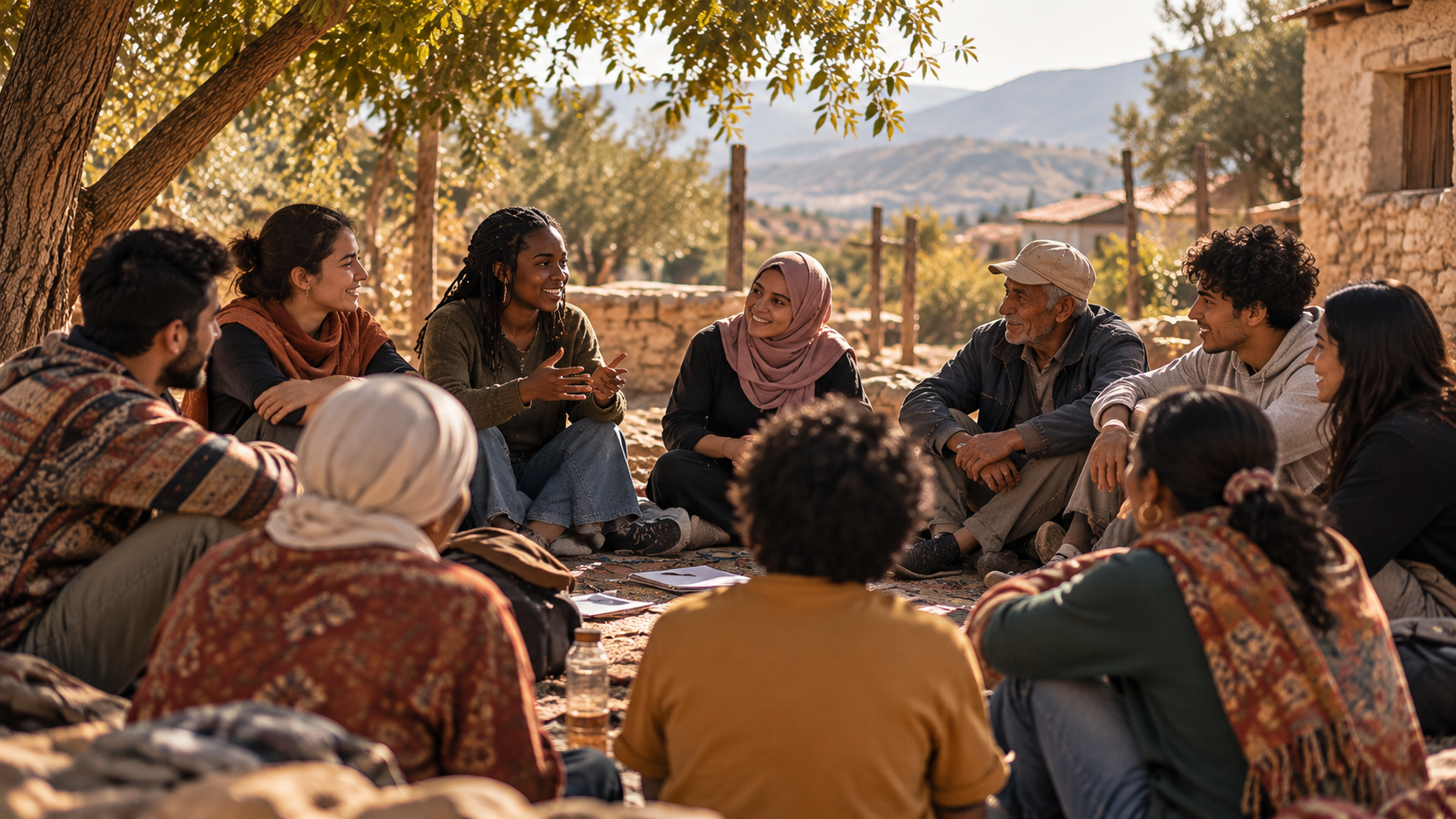
What does it take for people's perspectives to genuinely shape research, policy, education, learning and practice?
Inviting people to participate is an important starting point. But what happens after they have shared their experiences, concerns and ideas?
This question matters across research, education, community development and public policy. Organisations regularly invite people to contribute through interviews, surveys, workshops and consultations. Educators also seek feedback from learners and communities to inform teaching, learning and educational resources.
These activities can generate valuable insights. However, participation does not automatically become meaningful simply because an opportunity to speak has been provided.
The greater challenge is to consider how people's knowledge is understood, valued and used.
Recognising different forms of knowledge
Professional expertise, research evidence and educational knowledge are essential to informed decisions and effective learning. Yet they cannot always capture the complexity of people's everyday experiences.
Individuals and communities may recognise barriers, relationships and possibilities that are less visible from an institutional perspective. Learners, too, bring experiences, identities and ways of understanding the world that can enrich educational content and practice.
These contributions can challenge established assumptions, deepen understanding and open up new ways of approaching familiar questions.
Meaningful engagement therefore involves more than collecting responses to questions determined in advance. It requires openness to different forms of knowledge and a willingness to reconsider what we think we know.
Asking better questions about participation
Before beginning a participatory process, whether developing a research project, designing an educational resource or reviewing a programme, it is worth considering:
-
Whose perspectives are being sought? Are some people, experiences or forms of knowledge likely to remain overlooked?
-
How accessible is the process? Have language, culture, time, resources and different ways of communicating been considered?
-
Is there room for unexpected perspectives? Can participants raise questions or concerns beyond those initially identified?
-
What can participation influence? Can contributions shape the questions, content, approaches or decisions involved?
-
What happens afterwards? How will the knowledge shared inform research findings, educational practices, policies or future action?
These questions do not provide a universal formula. Instead, they encourage approaches that respond to the people, purposes and circumstances involved.
From contribution to meaningful action
Not every suggestion can be adopted, and participation does not remove the need for professional judgement, educational expertise or institutional responsibility.
What matters is approaching contributions with openness, being transparent about how decisions are made and considering whether participants have had a genuine opportunity to influence the process.
This understanding draws on a wider tradition of participatory research, education and practice that has long examined questions of voice, knowledge, power and decision-making.
For Transform Worlds, bringing research evidence into conversation with lived experience and diverse perspectives is an important part of developing more inclusive and responsive policies, educational experiences, resources and programmes.
Listening matters. What we learn, question and do with that knowledge matters just as much.
Selected Further Reading
The following publications offer diverse perspectives on meaningful participation, education, knowledge and decision-making, bringing together foundational scholarship, research from different geographical contexts and contemporary policy analysis.
-
Freire, P. (1970). Pedagogy of the Oppressed. A foundational contribution to critical education, dialogue and the relationship between learning and social transformation.
-
Fals-Borda, O., & Rahman, M. A. (Eds.). (1991). Action and Knowledge: Breaking the Monopoly with Participatory Action-Research. An influential exploration of participatory action research and the recognition of community knowledge.
-
Omodan, B. I., & Dastile, N. P. (2023). Analysis of Participatory Action Research as a Decolonial Research Methodology. Explores participatory action research through a decolonial and transformative perspective, drawing on scholarship from South Africa.
-
Marovah, T., & Mutanga, O. (2024). Decolonising Participatory Research: Can Ubuntu Philosophy Contribute Something?. Examines how Ubuntu philosophy can inform more equitable relationships between researchers and communities.
-
OECD (2025). Exploring New Frontiers in Citizen Participation in the Policy Cycle. Considers how citizen participation can influence public policy beyond consultation.
-
Becerra, T. (2026). Decolonizing Methodology: Co-designing Research with the Voices and Footprints of the Community. Explores collaborative research and educational curriculum development with a rural community in Colombia.
-
UNESCO Global Education Monitoring Report Team & United Nations Youth Office (2026). Lead with Youth: 2026 Youth Report. Examines youth and student participation in education decision-making around the world.